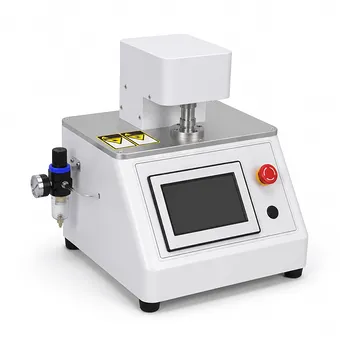
Comprehensive Battery Material Testing Solutions for Next-Generation Energy Storage
The development of high-energy-density, fast-charging, and long-life lithium-ion, sodium-ion, and solid-state batteries relies on strict physical, chemical, electrical, and mechanical characterization at every stage of the manufacturing continuum. Material inconsistencies at the nanoscale or microscopic level—such as broad particle size distribution, residual moisture, uncontrolled powder resistivity, burrs along slitted electrode foils, or micro-pinholes in separator membranes—can cause catastrophic cell failure, premature capacity degradation, and severe thermal runaway.
KINTEK’s advanced testing instruments are engineered to deliver micro-level analytical resolution, high repeatability, and full compliance with international testing standards (including ASTM, ISO, GB/T, and IEC). From raw active material synthesis to electrode processing and finished component safety validation, our testing systems provide researchers and quality control engineers with actionable, data-driven insights.
1. Raw Powder & Active Material Characterization
Active materials (NMC, LFP, LCO, graphite, silicon-carbon composites), conductive carbon additives, and solid electrolytes require rigorous physical and electro-mechanical evaluation before slurry preparation.
Dynamic BET Specific Surface Area Analysis
Specific surface area directly dictates the solid-electrolyte interphase (SEI) formation kinetics, active reaction site density, and binder consumption during slurry formulation. KINTEK’s dynamic BET surface area analyzer utilizes optimized continuous-flow thermal conductivity detection (TCD) with low-temperature nitrogen or argon physisorption. Capable of measuring ultra-low surface areas down to 0.0005 m²/g with rapid 3-minute turnaround cycles, it eliminates outgassing bottlenecks while providing accurate specific surface area data for powders and porous battery substrates.
Powder Resistivity and Compacted Density Measurement
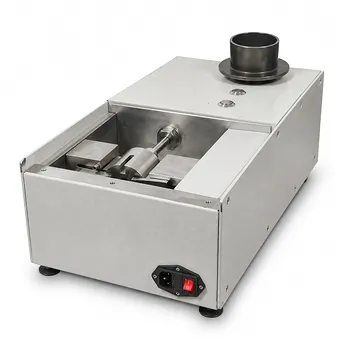
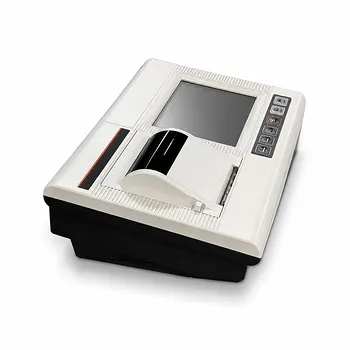
Electrode conductivity is intrinsically linked to active powder compaction and electrical percolation networks. Our automated powder resistivity and compacted density measurement system combines high-precision closed-loop servo mechanical loading (up to multi-ton capacities) with four-probe electrical resistance sensing. By logging synchronous pressure, displacement (thickness), and voltage drop data, the system automatically calculates true bulk resistivity, sheet resistance, and compacted green density as dynamic functions of applied compaction pressure—essential for designing high-rate cathode and anode formulations.
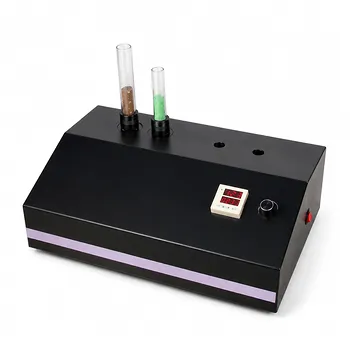
Powder Tap & Bulk Density Testing
Volumetric energy density in lithium cells depends heavily on the packing efficiency of precursor and active powders. KINTEK's multi-station tap density testers feature standardized drop heights (extended 50 mm amplitude compliant with GB/T 5162 and YS/T 677 standards) and programmable tap frequencies to accurately determine apparent bulk density, tapped density, Hausner ratio, and Carr index, ensuring consistent flowability and die filling during pilot and commercial processing.
True Density, Porosity, and Pycnometry
True skeletal density characterization of active materials, solid electrolyte pellets, and porous sintered matrices is achieved through automated helium/gas displacement pycnometers. These instruments deliver micro-volume accuracy to compute open/closed cell content and skeletal density, identifying internal voids and structural sintering defects.
2. Slurry Rheology & Wet Film Evaluation
Electrode quality is established during the mixing and wet coating stages. Precise rheological profiling prevents particle agglomeration, sedimentation, and pinhole formation during slot-die or doctor-blade application.
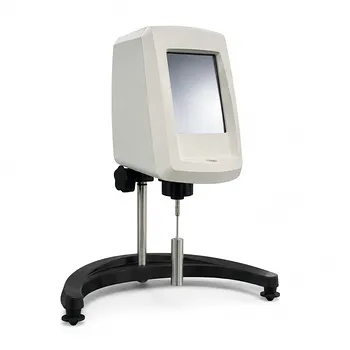
Universal Continuous-Sensing Rotational Viscometers
Slurries exhibit complex non-Newtonian, shear-thinning, and thixotropic behaviors. KINTEK’s digital continuous-sensing rotational viscometers feature ultra-sensitive torque transducers, programmable shear rate ramps, and integrated temperature regulation. Real-time viscosity trend monitoring allows operators to optimize dispersion formulations, identify optimal binder-to-solvent ratios, and monitor viscosity recovery profiles crucial for preventing edge-sagging and leveling defects during coating.
High-Precision Eccentric Wheel Wet Film Thickness Gauges
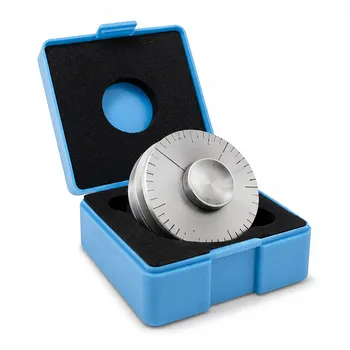
Verifying wet film thickness immediately post-coating prevents costly downstream scrap. Our stainless steel eccentric wheel gauges provide precise wet film thickness determination across flat and curved continuous foils, enabling operators to calibrate coating gap clearances before entering drying ovens.
3. Electrode Mechanical Integrity & Physical Metrology
During calendering, slitting, and winding/stacking, electrode foils experience severe mechanical stress. Microscopic defects or poor coating adhesion can induce delamination, short circuits, or internal resistance spikes.
Automatic Electrode Sheet Resistance & Electronic Conductivity Testing
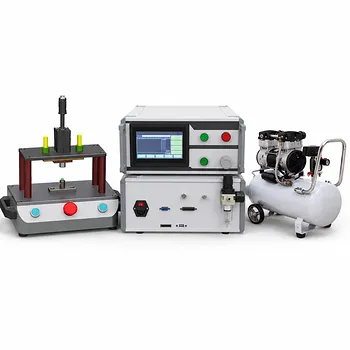
Calendered electrode sheets must demonstrate uniform cross-sectional electronic conductivity. KINTEK’s automatic electrode sheet resistance tester utilizes precision multi-pin arrays and programmable pneumatic/servo top loading (up to 200 kg). By decoupling current-collector contact resistance from active coating bulk resistance, the unit maps conductivity profiles across the entire width of the electrode foil, ensuring calender roll uniformity and consistent electron transport.
Mandrel Bend Flexibility & Coating Adhesion Testing
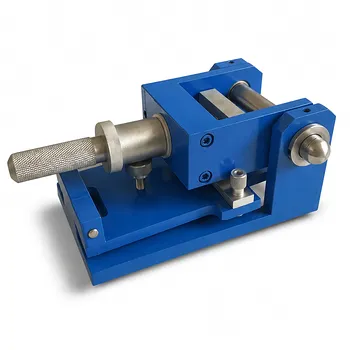
To withstand tight cylindrical jelly-roll winding or prismatic Z-folding without micro-cracking, electrode coatings must exhibit high adhesion and mechanical flexibility. Our cylindrical mandrel bend testers accommodate interchangeable standardized mandrel diameters (up to 32 mm), providing reproducible bending strain metrics to evaluate cracking, flaking, and interfacial delamination.
Optical Video Inspection for Burr Measurement
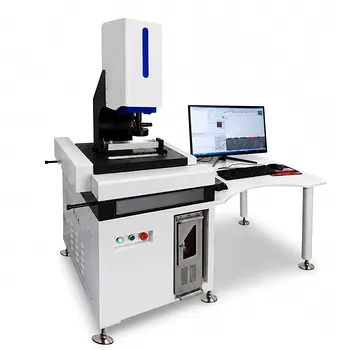
Microscopic burrs generated along current collector edges during mechanical foil slitting are a leading cause of separator puncture and catastrophic internal short circuits. KINTEK’s automatic burr measurement system integrates a vibration-damped natural granite base, high-resolution optical video cameras, programmable multi-angle LED illumination, and sub-pixel edge detection algorithms. The system quantifies horizontal and vertical burr heights with sub-micron precision, logging statistical process control (SPC) data to guide slitter blade maintenance schedules.
4. Separator Characterization & Mechanical Safety Testing
Battery separators act as the critical physical barrier between positive and negative electrodes while facilitating rapid lithium-ion transport.
Automated Gurley Air Permeability Densitometer
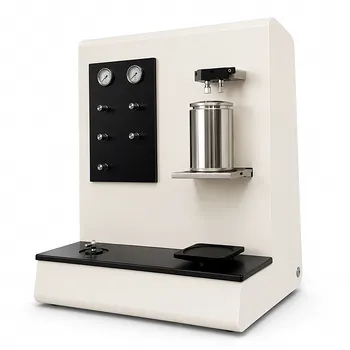
Ion transport resistance through microporous polyolefin (PE/PP) or ceramic-coated separators directly correlates with air permeability. Our automated Gurley densitometer applies an exact differential pressure across a defined membrane aperture to measure the time required for a fixed volume of air to pass through. Featuring ultra-precise optical timing resolution and automated pneumatic clamping, the system eliminates operator variance and delivers highly repeatable Gurley seconds per standard unit volume.
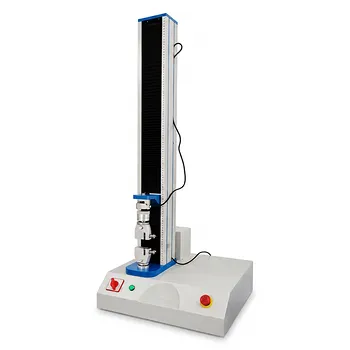
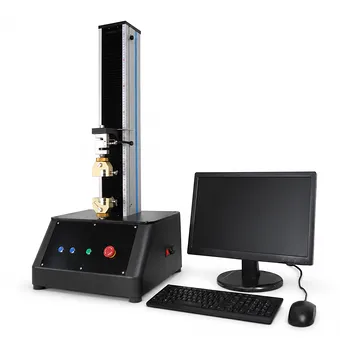
Separator Tensile, Puncture, and Tab Weld Strength Testers
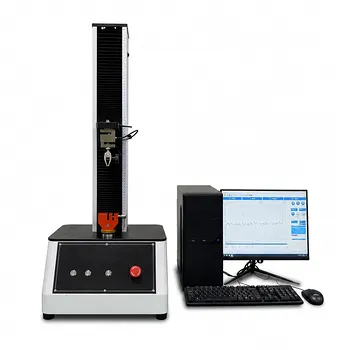
Mechanical robustness prevents separator rupture during winding and protects against dendrite penetration during cycling. KINTEK offers specialized computerized tensile and puncture testing machines with load cells rated down to ultra-fine resolutions and generous test strokes (up to 800 mm). These versatile machines support:
- Separator Puncture Testing: Measuring puncture peak force and elongation using standardized rounded probe tips (ASTM F1306).
- Separator Tensile/Elongation Testing: Evaluating machine direction (MD) and transverse direction (TD) yield stress and ultimate tensile strength.
- Electrode Tab Welding Peel/Shear Testing: Verifying ultrasonic or laser tab weld joints (copper/nickel/aluminum) to ensure structural survivability under vehicle vibration and thermal expansion.
5. Trace Moisture Quantification & Chemical Purity
Moisture is the most destructive contaminant in lithium-ion and sodium-ion systems. Even single-digit parts-per-million (ppm) levels of water react with fluorinated electrolyte salts (such as $\text{LiPF}_6$) to form hydrofluoric acid (HF), leading to transition metal dissolution, SEI degradation, and gas evolution.
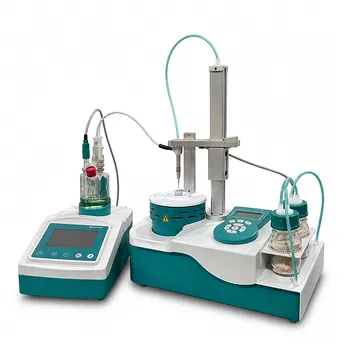
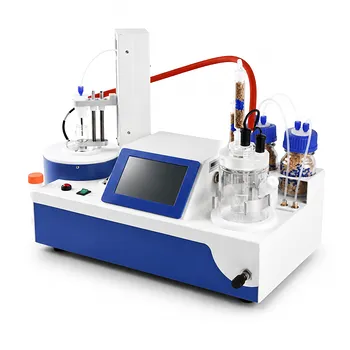
Coulometric Karl Fischer Titrators with Automated Headspace Ovens
Designed specifically for hygroscopic active materials, solid-state electrolytes, and liquid electrolyte formulations, KINTEK’s coulometric Karl Fischer systems provide ultra-trace water quantification down to 1 ppm.
- Integrated Headspace Extraction: Solid powder samples are hermetically sealed in headspace vials and heated in a controlled oven; evaporated moisture is transferred via an ultra-dry inert carrier gas into the titration cell. This prevents active materials from fouling the coulometric diaphragm and electrolyte reagents.
- Intelligent Drift Compensation: Fully automated drift tracking and high-precision electrochemical end-point detection ensure strict GLP/GMP data integrity.
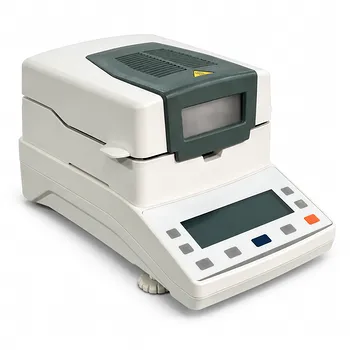
Benchtop Halogen Moisture Analyzers
For fast, thermogravimetric moisture screening of raw powders, conductive slurries, and packaging materials, our halogen moisture balances deliver 1 mg / 0.01% moisture resolution with rapid, uniform halogen heating up to 199°C, complete with multi-method onboard recipe storage.
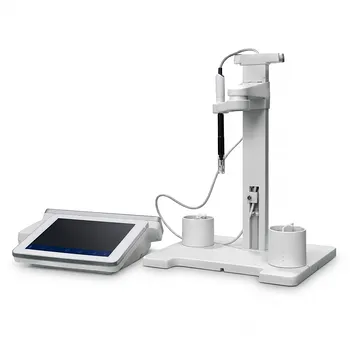
High-Accuracy Benchtop Conductivity and TDS Meters
Electrolyte solutions, wash waters, and precursor chemical solutions require precise electrolytic conductivity verification. KINTEK benchtop conductivity systems feature multi-range automated cell constant calibration, dynamic temperature compensation, and IP54 laboratory enclosures for high-accuracy resistivity, salinity, and conductivity logging.
6. Cell Enclosure, Safety Vent, and Non-Destructive Inspection
Final structural verification of cylindrical (18650, 21700, 4680), prismatic, and pouch cell enclosures guarantees hermeticity and controlled pressure venting under thermal stress.
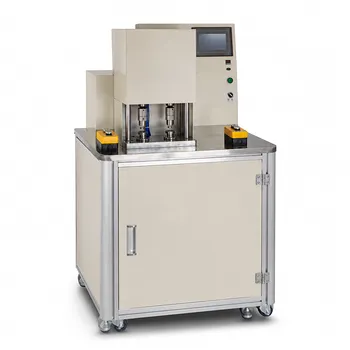
Two-Station Battery Cap Pressure Testing Machine
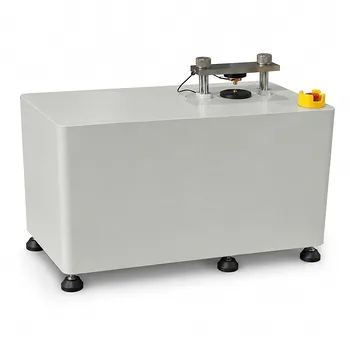
Cylindrical cell top caps incorporate Current Interrupt Devices (CID) and safety rupture discs to prevent explosion during overcharge or runaway. KINTEK's dual-station cap pressure testing machine accurately inspects both CID disconnect pressure and safety vent bursting pressure using regulated pneumatic controls and PLC data logging, providing essential QA verification for automated pack manufacturing.
Precision Airtightness and Leak Testing Systems
Pouch cell heat seals, prismatic aluminum casing weld seams, and battery module cooling jackets require verified IPX leak resistance. Our high-precision differential air pressure leak detectors provide 0.2% Full Scale measurement accuracy, automated cycle sequences, and non-destructive dry-air testing with high throughput.
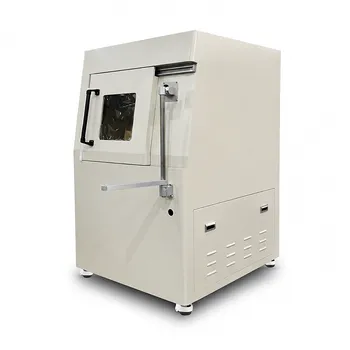
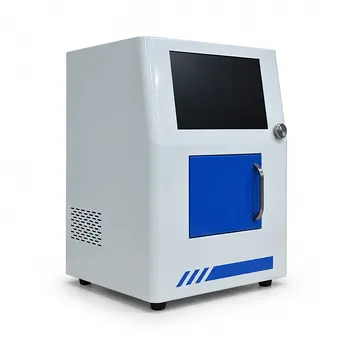
Offline Microfocus X-Ray Battery Inspection Systems
Non-destructively visualizing internal jelly-roll alignment, tab weld integrity, electrode overhang (anode-to-cathode alignment), and casing voids is critical for both failure analysis and batch QC. KINTEK’s offline X-ray inspection machine features a high-voltage (up to 130 kV) microfocus X-ray source, a four-axis motorized precision positioning stage, high-resolution digital flat panel detectors, and lead radiation shielding, delivering crisp sub-micron radiographic images of intact cylindrical, pouch, and prismatic cells.
Technical Comparison of Core Battery Material Testers
| Instrument / System |
Primary Analytical Metric |
Key Measurement Range / Precision |
Standard Compliance / Application |
| Powder Resistivity & Density Tester |
Resistivity, Conductivity, Compacted Density |
Servo pressure up to multi-ton; 4-probe sensing |
Active powder formulation & calender simulation |
| Dynamic BET Surface Area Analyzer |
Specific Surface Area, Pore Distribution |
Down to 0.0005 m²/g; ~3 min test time |
Active materials, carbon blacks, solid electrolytes |
| Coulometric Karl Fischer with Oven |
Trace Moisture / Water Content |
1 ppm to 100%; Automated Headspace Oven |
Cathodes, anodes, electrolytes, separators |
| Automatic Burr Measurement System |
Slitting Edge Burrs, Edge Deformations |
Sub-micron optical metrology; Granite base |
Slit current collectors & coated foil edges |
| Separator Gurley Air Permeability |
Air Permeability (Gurley Seconds) |
Exact differential pressure; high-speed timing |
Microporous PE/PP/Ceramic battery separators |
| Separator Tensile & Puncture Tester |
Puncture Resistance, Tensile Strength, Elongation |
High-precision load cell; stroke up to 800 mm |
ASTM F1306, ASTM D882 membrane mechanics |
| Rotational Viscometer |
Dynamic Slurry Viscosity, Rheological Flow |
Continuous sensing; multi-speed torque control |
Slurry mixing, binder dispersion, coating QC |
| Two-Station Cap Pressure Tester |
CID Disconnect Pressure, Vent Burst Pressure |
Dual-station pneumatic PLC control |
18650 / 21700 / 4680 cell safety cap QC |
| Offline Microfocus X-Ray System |
Internal Overhang, Jelly-roll Winding Defects |
130 kV microfocus tube; 4-axis motorized stage |
Cell safety, NDT inspection, failure analysis |
Why Choose KINTEK for Your Battery Testing Infrastructure?
- End-to-End Workflow Integration: As a dedicated manufacturer of battery R&D and processing machinery—from slurry mixers, doctor-blade coaters, and heated rolling presses to cell assembly lines—KINTEK designs its testing equipment to seamlessly interface with practical cell manufacturing parameters.
- Exceptional Analytical Accuracy: Built with high-grade components—such as microfocus X-ray tubes, granite optical bases, and digital closed-loop servo controllers—our instruments deliver the repeatability needed for both top-tier academic journals and high-throughput production lines.
- Full Standards Compliance: Every test instrument conforms to relevant international testing protocols (ASTM, ISO, GB/T, IEC, DIN), ensuring your data stands up to rigorous peer review and industrial client audits.
- Customizable Fixtures & Environmental Chambers: From custom-diameter mandrel bend sets and inert-atmosphere glovebox-compatible enclosures to specialized tensile grips for fragile ultra-thin lithium metal foils, KINTEK offers tailored engineering solutions to match your exact experimental requirements.
Accelerate Your Energy Storage Characterization Today
Upgrading your laboratory with reliable, high-precision battery material testing equipment reduces development cycles, prevents pilot-line scrap, and ensures optimal electrochemical performance and safety.
Whether you are outfitting a new university energy storage research center, setting up a solid-state battery pilot facility, or upgrading your gigafactory incoming QC line, KINTEK’s team of technical specialists is ready to help you configure the ideal instrument suite.
Contact Our Battery Material Testing Specialists Today to request technical specifications, schedule a sample testing consultation, or receive a customized quotation tailored to your research and quality control goals.