KINTEK’s supercapacitor equipment supports the complete cylindrical cell fabrication and validation workflow, serving battery R&D laboratories, university research centers, pilot production lines, and industrial capacitor manufacturers. The range includes winding machines, electrode and separator assembly systems, electrolyte filling equipment, casing and sealing machines, tab punching and riveting tools, cell shaping equipment, laser welders, and multi-channel battery and supercapacitor testers. From controlled material handling and precision assembly to reliable sealing and charge-discharge evaluation, these systems help users improve process consistency, shorten development cycles, and scale laboratory procedures toward repeatable production.
切换分类
超级电容器设备
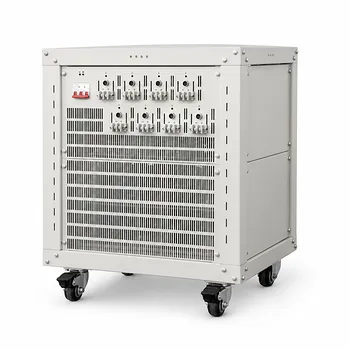
八通道 5V 20A 锂离子电池及超级电容器测试设备 电池测试仪
货号: DC11
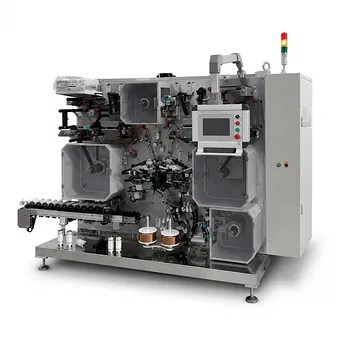
全自动超级电容器电极隔膜卷绕机
货号: CX04
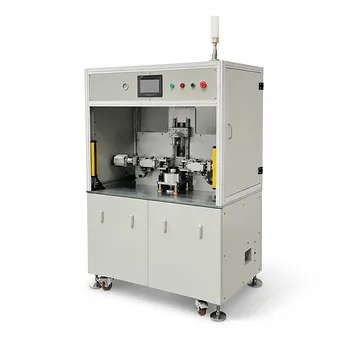
圆柱形电容器壳体数控滚槽预封口机
货号: CX01
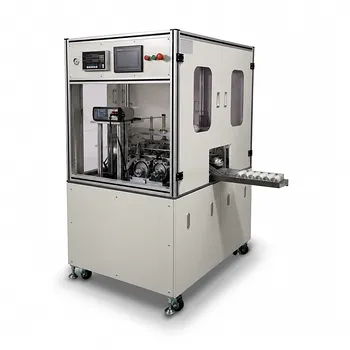
精密数字电池电芯整形机 超级电容器电芯压平机
货号: CX06
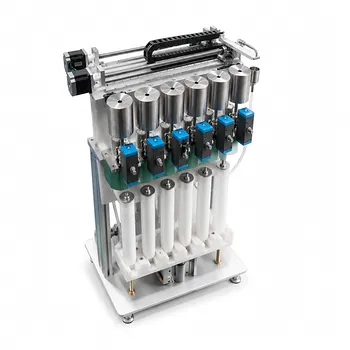
全自动超级电容器电解液注液机
货号: CX05
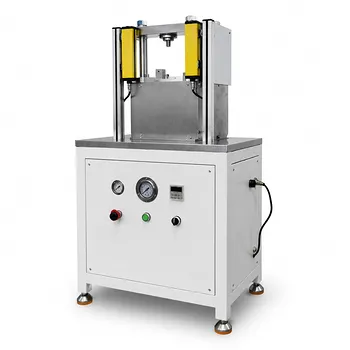
用于超级电容器和电容器电芯组装的电动铆接机
货号: CX13
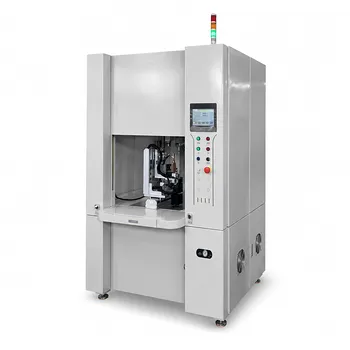
超级电容器激光焊接机 激光焊机
货号: CX03
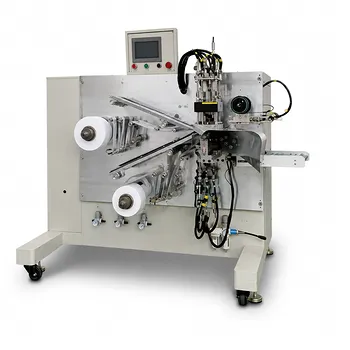
圆柱形锂离子电池超级电容器半自动卷绕机
货号: CX02
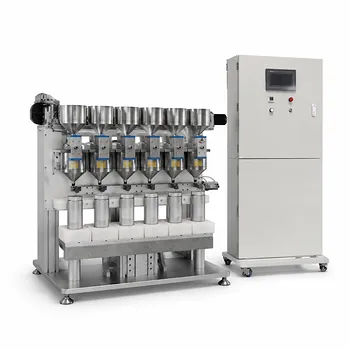
超级电容器电池六工位真空注液机
货号: CX11
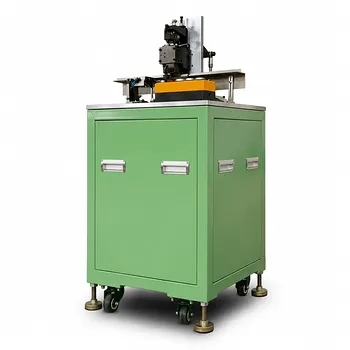
用于超级电容器和圆柱形电容器极片的手动极耳铆接机
货号: CX15
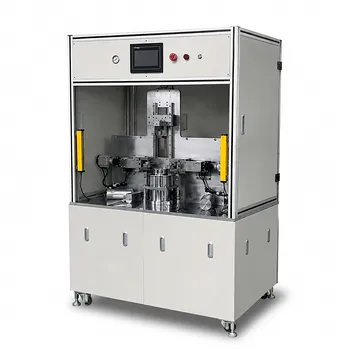
超级电容器封口专用数控滚槽预封口机
货号: CX10
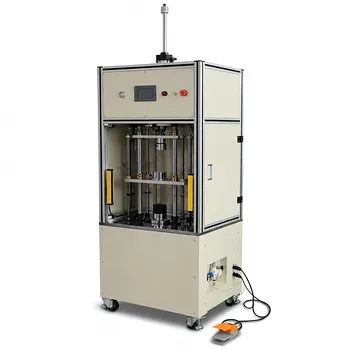
全自动超级电容器电芯套壳机
货号: CX07
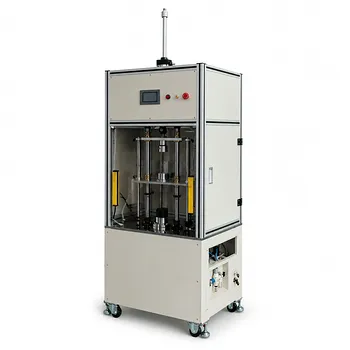
电容器极耳冲孔机
货号: CX09
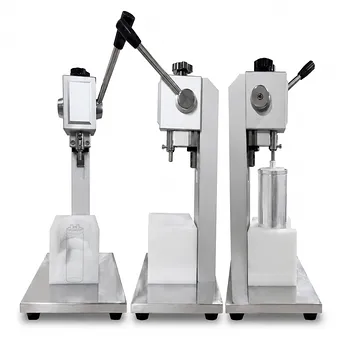
手动超级电容器封口压装机
货号: CX12
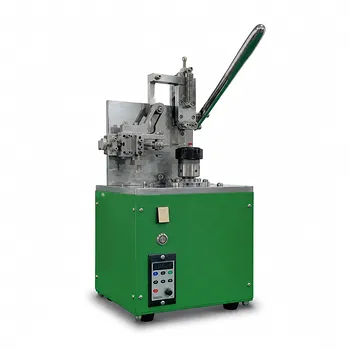
铝壳小电容滚槽封口机
货号: CX14
Complete Supercapacitor Equipment for Research, Pilot Production, and Manufacturing
Supercapacitors require carefully controlled electrode handling, separator alignment, electrolyte impregnation, mechanical assembly, sealing, and electrical validation. Small variations in winding tension, tab position, electrolyte volume, case dimensions, or sealing pressure can influence internal resistance, leakage behavior, cycle life, safety, and final energy performance. KINTEK’s supercapacitor equipment portfolio is designed to address these process requirements as an integrated workflow, helping researchers and manufacturers establish stable, repeatable cell production from individual electrode sheets to finished cylindrical cells and tested devices.
Our equipment is suitable for laboratory development, process optimization, pilot-scale manufacturing, teaching and demonstration facilities, and demanding industrial production environments. The product range combines manual, semi-automatic, and fully automatic systems so users can select the appropriate level of automation for their throughput, budget, process maturity, and cell format. Equipment can also be configured around specific electrode dimensions, cylindrical case sizes, tab structures, electrolyte requirements, and production procedures.
Electrode and Separator Winding for Consistent Cell Construction
Winding is one of the most important steps in cylindrical supercapacitor and lithium-ion cell assembly. The electrode sheets and separator must be fed, aligned, and wound with consistent tension to create a compact and mechanically stable cell. Poor alignment may cause edge exposure, separator displacement, uneven current distribution, short circuits, or difficulties during casing and sealing. Excessive or insufficient tension can also affect cell geometry, electrolyte absorption, and long-term reliability.
KINTEK offers both fully automatic and semi-automatic supercapacitor winding machines to support different production needs. The fully automatic winding machine integrates electrode and separator assembly with automatic tension control, length detection, alignment correction, protective tape application, short-circuit testing, and quality sorting. These functions help reduce operator variation while maintaining consistent roll structure across repeated production cycles. Automatic process monitoring and sorting can also help identify defective units before they move to downstream assembly.
For research laboratories and pilot lines, the semi-automatic cylindrical cell winding machine provides a practical balance between operator flexibility and process control. It supports controlled separator tension, precise alignment, automatic termination tape application, and reliable cell unloading. This type of system is useful when users are developing new electrode materials, testing different separator configurations, or producing multiple cell sizes without requiring a fully automated line. The operator can retain process visibility while benefiting from repeatable winding and improved assembly efficiency.
Accurate Electrolyte Filling and Inert-Environment Compatibility
Electrolyte filling directly affects wetting, ionic conductivity, internal resistance, activation behavior, and the consistency of finished supercapacitor cells. Manual filling may lead to variation in dosage, incomplete absorption, contamination risk, or extended waiting time before sealing. KINTEK’s automatic vacuum electrolyte filling machines are designed to improve dosing repeatability and promote effective electrolyte penetration into the wound electrode and separator structure.
The filling systems use vacuum filling and pressurization to support reliable electrolyte absorption. Adjustable filling volumes from 0 to 250 ml allow users to adapt the machine to different cell sizes and process recipes. The six-station vacuum electrolyte filling machine provides independent station operation and filling accuracy of approximately ±1%, helping laboratories and production teams maintain more consistent electrolyte loading. Independent control is especially valuable when different cells require separate process timing or when operators need to isolate a station for maintenance, adjustment, or experimental comparison.
Corrosion-resistant construction is important when equipment is exposed to electrolyte vapors or liquid chemicals. The filling machines are designed with materials and structures intended to support dependable operation in demanding environments. Their compatibility with controlled inert glovebox workflows makes them suitable for moisture-sensitive materials and electrochemical research where environmental control is essential. By combining controlled dosing, vacuum assistance, adjustable parameters, and multi-station operation, these systems help users improve process stability while reducing manual handling.
Casing, Grooving, and Pre-Sealing for Cylindrical Supercapacitor Cells
After winding, filling, and initial assembly, the cell must be inserted into its case and mechanically secured before final sealing. Grooving and pre-sealing determine the position of internal components, support dimensional stability, and prepare the housing for a reliable crimped or sealed structure. Inconsistent groove depth, poor concentricity, or unstable clamping may create assembly defects and reduce the quality of the finished cell.
KINTEK provides CNC grooving and pre-sealing equipment for cylindrical capacitor and supercapacitor cases. Servo-controlled forming and programmable HMI operation allow users to set and repeat key process parameters with greater precision than purely manual methods. Stable concentric clamping helps maintain consistent case geometry, while durable tooling supports repeated operation in pilot and production environments. These systems are suitable for applications requiring controlled roll-groove formation, pre-sealing, and dimensional repeatability.
The aluminum shell small capacitor grooving and sealing machine is configured for Φ16 cases and integrates synchronized grooving and sealing operations. Its automatic clamping, imported grooving tooling, high concentricity, stable dimensions, and long tooling life support efficient production of small cylindrical capacitors. With a stated tooling life of up to 500,000 cycles and approximately 98% uptime under suitable operating conditions, it can help manufacturers maintain reliable throughput while reducing frequent tooling replacement and adjustment.
For customers with specialized housing sizes or sealing requirements, KINTEK can help evaluate the required tooling, clamping method, groove dimensions, and machine configuration. This is particularly useful when scaling a process from laboratory prototypes to pilot production, where the cell design may change several times before the final manufacturing specification is established.
Cell Casing and Plug Pressing for Controlled Mechanical Assembly
Casing operations must position the wound and welded cell accurately inside the cylindrical housing while protecting the electrode stack, cover, O-rings, and internal connections. The automatic supercapacitor cell casing machine is designed for insertion of welded cells with assembled covers and O-rings. Adjustable insertion depth allows the equipment to accommodate process requirements and helps improve consistency across repeated assemblies.
PLC-controlled operation supports straightforward production management and integration with other equipment. Reliable sealing, safe operation, flexible production integration, and high-throughput performance make the casing machine suitable for manufacturing environments that need more consistent placement than manual assembly can provide. Automated casing can also reduce operator fatigue and minimize handling differences that may affect O-ring positioning or cover seating.
For laboratory and small-batch work, the manual supercapacitor plug pressing machine provides a compact and flexible solution for post-filling assembly. It offers a 20 mm working stroke and compatibility with products up to approximately 60 mm in diameter, while also supporting transfer into glovebox-based workflows. This equipment is useful for research teams that need controlled pressing without committing to a fully automated production system. It can be used during formulation studies, prototype validation, process trials, and low-volume cell preparation.
Tab Punching, Riveting, and Electrical Connection Preparation
Reliable electrical connection is essential for current collection and subsequent testing or use of the finished supercapacitor. Tab and lead installation must be positioned accurately and secured with stable mechanical force. Inconsistent holes, tab placement, or riveting height can affect contact resistance, weld positioning, and the mechanical integrity of the connection.
KINTEK’s capacitor tab punching machine provides a dedicated preparation step for repeatable tab and lead installation. It features a 3 mm hole, hole accuracy of approximately ±0.05 mm, position accuracy of approximately ±0.02 mm, and cutting force of at least 100 kg. Its compact design can be suitable for glovebox-compatible laboratory layouts and clean assembly areas. Consistent punching improves the preparation of electrode sheets before riveting and helps reduce variation in downstream connection operations.
The electric riveting machine supports supercapacitor and horn-type capacitor cell assembly with motor-driven operation, adjustable riveting height, and customizable tooling travel. A production rate of approximately 10 pieces per minute makes it useful for controlled laboratory production and small-scale manufacturing. For applications that require straightforward operation and easy adjustment, the manual lead tab riveting machine provides an alternative approach. It supports adjustable electrode width and stable 500 W operation, with a structure intended for convenient maintenance and dependable installation of lead tabs on cylindrical capacitor and battery electrode sheets.
The selection between automatic, electric, and manual riveting depends on the required output, connection design, operator involvement, and degree of process validation. KINTEK can assist customers in matching the tooling and operating method to the electrode dimensions, tab material, hole pattern, and desired assembly sequence.
Precision Cell Shaping Before Welding and Final Assembly
Cell shaping helps prepare the electrode and collector-tab structure for subsequent welding and assembly. A cell that is not properly formed may be difficult to position, can create uneven contact, or may introduce variation into laser welding and casing operations. The precision digital battery cell shaping and supercapacitor cell flattening machine uses a four-station foil-forming process to provide more repeatable preparation.
The machine incorporates short-circuit screening, accurate length adjustment, and PLC control. These functions help operators manage the shaping sequence, check for electrical abnormalities, and maintain consistent dimensions before collector-tab laser welding. A digital control structure also makes it easier to repeat established process settings and adjust the equipment when working with different cell designs. This system is suitable for battery and supercapacitor applications where controlled foil forming and dimensional repeatability are important to downstream welding quality.
Laser Welding for Strong, Low-Heat Connections
Laser welding is widely used where supercapacitor assembly requires precise, localized, and repeatable joining. Compared with broader heat-input processes, a controlled laser weld can produce a narrow weld profile and a smaller heat-affected zone when the process is correctly matched to the materials and joint design. This helps limit thermal influence on nearby components and supports accurate joining of covers, tabs, terminals, and sealing-related structures.
KINTEK’s supercapacitor laser welding machine is designed for precision welding of supercapacitor and lithium-ion battery components. Accurate positioning supports repeatable joint placement, while narrow welds and minimized heat-affected zones can help protect surrounding materials. Strong welded joints contribute to mechanical stability and electrical continuity, and the automation-ready design allows the equipment to be considered for integration into a broader cell production line.
Laser welding performance depends on material type, thickness, surface condition, joint geometry, laser parameters, shielding requirements, and fixture accuracy. For this reason, equipment selection should be based on the complete welding application rather than laser power alone. KINTEK can support discussions regarding workpiece positioning, fixture design, sample testing, automation interfaces, and process development requirements.
Multi-Channel Testing for Performance Validation
Manufacturing equipment must be supported by reliable testing. Charge-discharge cycling, pulse testing, direct-current internal resistance measurement, voltage monitoring, and temperature monitoring provide essential information about cell behavior and process quality. Testing is also necessary when comparing electrode formulations, evaluating assembly changes, validating production consistency, or investigating performance degradation.
The eight-channel 5 V, 20 A lithium-ion battery and supercapacitor testing equipment provides independent control for multiple channels, enabling users to test several cells or conditions at the same time. It supports charge-discharge cycling, pulse testing, and DCIR evaluation, with detailed data logging for analysis and traceability. Auxiliary temperature and voltage monitoring can be incorporated for more comprehensive observation of cell behavior during testing.
Independent channel control is valuable for research because each channel can be assigned a different current profile, cycling schedule, or test condition. It can also improve laboratory utilization by allowing multiple samples to run without requiring separate testers. For pilot and production applications, recorded data can help identify process drift, compare batches, and support quality documentation. The 5 V and 20 A range is suited to a variety of laboratory battery and supercapacitor evaluation tasks, subject to the electrical requirements of the specific cell design.
Flexible Equipment for Different Production Stages
A major advantage of KINTEK’s supercapacitor equipment range is the ability to select individual machines according to the current stage of development. A research group may begin with a semi-automatic winding machine, manual plug press, manual tab riveting machine, and multi-channel tester. As the process becomes more stable, the same workflow can be expanded with automatic winding, vacuum electrolyte filling, automated casing, CNC grooving and pre-sealing, electric riveting, and laser welding.
This staged approach allows users to invest in equipment that matches actual production demand. It also supports a practical transition from experimental cell designs to repeatable pilot manufacturing. Instead of treating research and production as completely separate processes, teams can establish common process controls, dimensions, test methods, and quality checkpoints throughout development.
The equipment can be used for supercapacitors, cylindrical capacitors, lithium-ion cells, and related electrochemical devices where the mechanical and electrical processes are compatible. Beyond battery and capacitor manufacturing, some of the underlying equipment concepts are relevant to advanced materials research, laboratory process development, and academic production environments that require controlled pressing, joining, forming, or testing.
Professional Support and Customizable Solutions
Supercapacitor production equipment must be selected according to more than a product name or nominal output. Important considerations include electrode size, separator width, cell diameter, winding length, electrolyte volume, case material, tab geometry, groove profile, sealing method, welding joint, desired throughput, cleanroom or glovebox conditions, and the level of data monitoring required. KINTEK’s technical team can help review these parameters and recommend a suitable equipment combination.
Customization may include tooling dimensions, fixtures, clamping structures, winding mandrels, filling nozzles, machine layouts, control interfaces, process recipes, station quantity, and integration requirements. For customers developing a new supercapacitor format, sample-based evaluation and process discussion can help identify the most suitable configuration before a larger equipment investment is made. We can also help users determine whether a manual, semi-automatic, or fully automatic solution is more appropriate for their current stage.
If you are planning a supercapacitor research line, upgrading an existing assembly process, or building a pilot production workflow, contact KINTEK to discuss your requirements. Share your cell dimensions, electrode and separator specifications, electrolyte volume, expected output, and preferred automation level through our contact form. Our team can help you plan a practical equipment combination, clarify technical specifications, and develop a customizable solution for reliable supercapacitor manufacturing and testing.
获取报价
我们的专业团队将在一个工作日内回复您。请随时与我们联系!